
Top 5 Ways to Help Kids Manage Big Emotions
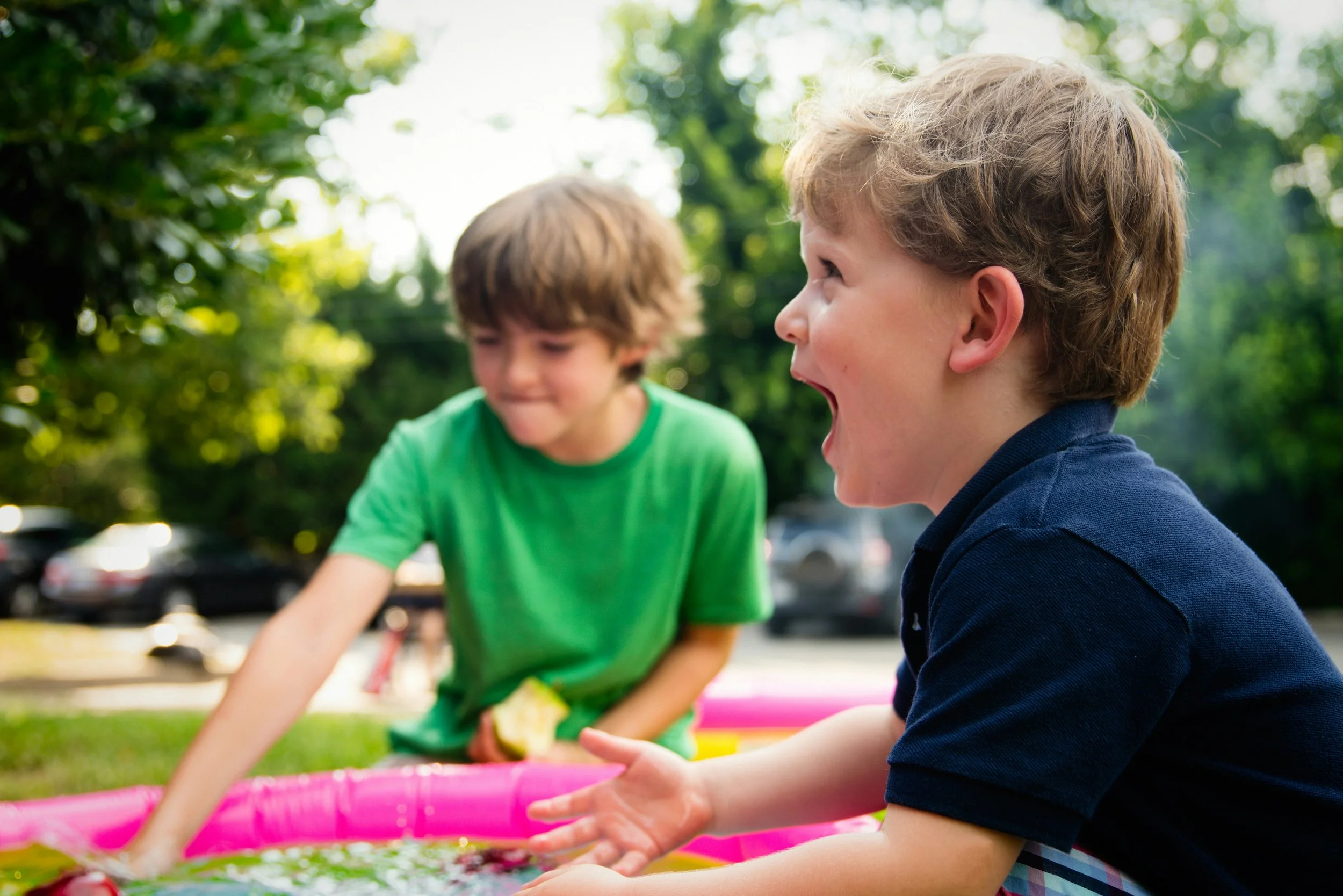
Big feelings are a completely normal part of growing up. Children experience emotions just as intensely as adults do, but they do not yet have the tools or brain development to manage those feelings on their own. The prefrontal cortex, the part of the brain responsible for reasoning, impulse control and emotional regulation, is not fully developed until our mid-twenties. So when your five-year-old loses it because their sandwich was cut into triangles instead of squares, their reaction is not defiance or manipulation. It is a brain that is still learning how to cope.
The goal is not to stop big emotions from happening. It is to help children learn how to move through them safely, so they build the skills they need to handle life’s challenges as they grow.
Here are five practical strategies that can make a real difference.
1. Help them name the feeling
When children can label what they are experiencing, something powerful happens. The act of naming an emotion helps shift brain activity from the reactive, emotional centre (the amygdala) to the more logical, problem-solving areas. Researchers call this “name it to tame it,” and it is one of the most effective tools we have for emotional regulation.
For younger children, start simple. You might say, “It looks like you’re feeling really frustrated right now,” or “I can see you’re feeling sad about that.” You are giving them language for something they can feel but cannot yet articulate. Over time, they will start to use these words themselves.
For older children and teenagers, you can expand the vocabulary beyond the basics. Instead of just “angry,” explore whether they are feeling disappointed, embarrassed, overwhelmed or left out. The more specific the language, the better they can understand what is driving the emotion and what might help.
Visual tools such as feelings charts, emotion wheels or picture books can be really helpful, particularly for children who find verbal expression difficult. These give kids a way to point to or identify what they are feeling when the words are not coming easily.
2. Stay calm (even when it is hard)
This one is easier said than done, but it is arguably the most important strategy on this list. Children are incredibly attuned to the emotional state of the adults around them. They pick up on our tone of voice, our body language, our breathing patterns, even our heart rate when we are holding them. This process, known as co-regulation, means that a child’s nervous system will often mirror ours.
When a child is in the middle of a big emotional moment and the adults around them escalate too, the child’s distress tends to intensify. But when a parent or caregiver can stay grounded and calm, it sends a signal to the child’s nervous system that they are safe. This does not mean you need to be emotionless or never feel frustrated. It means doing your best to regulate your own response first, so you can be the steady presence your child needs.
A few things that can help in the moment: take a slow breath before you respond, lower your voice rather than raising it, and remind yourself that your child is not giving you a hard time, they are having a hard time.
If you find it genuinely difficult to stay calm during your child’s outbursts, that is worth paying attention to. It does not make you a bad parent. It might simply mean that your own nervous system needs support too. Speaking with a psychologist can help you develop strategies for managing your own stress response, which in turn makes it easier to support your child.
3. Connect before you correct
When a child is upset, our instinct is often to jump straight to fixing the problem or explaining why their reaction was over the top. But here is the thing: when emotions are running high, the logical brain is essentially offline. A child in full meltdown mode cannot process reasoning, lessons or solutions. They need to feel heard first.
Connection before correction means pausing to acknowledge the feeling before trying to address the behaviour. It might sound like, “I can see that really upset you,” or “You’re really angry about that, aren’t you?” or simply getting down to their eye level and saying, “I’m here.”
This does not mean you are condoning bad behaviour or letting them “get away with it.” It means you are meeting them where they are emotionally, which is what allows them to calm down enough to actually hear what you have to say next. The teaching moment can come later, once the storm has passed and their brain is back in a state where it can learn.
Physical connection can be powerful too. Some children respond well to a hug, a hand on their back, or simply sitting quietly beside them. Others may not want to be touched during a meltdown, and that is okay. Follow their lead and let them know you are there when they are ready.
4. Teach simple calming tools
Every child is different, and what works for one may not work for another. The key is to build a toolkit of calming strategies and help your child figure out which ones work best for them.
Breathing exercises: Deep, slow breathing activates the parasympathetic nervous system, which helps the body shift out of fight-or-flight mode. Try “smell the flowers, blow out the candles” for younger children, or simple box breathing (in for four, hold for four, out for four, hold for four) for older kids.
Movement: Some children need to physically move through their emotions. Running, jumping, stomping or even dancing can help release the energy that builds up during a big emotional moment. For children who need more structured movement, activities such as yoga or martial arts can teach them how to channel big feelings into controlled physical expression.
Sensory input: Squeezing a stress ball, wrapping up tightly in a blanket, pressing their hands against a wall, or holding something with an interesting texture can help some children feel grounded. These strategies work particularly well for children who seek proprioceptive input (deep pressure) to help regulate.
Space and solitude: Not every child wants comfort during a meltdown. Some children regulate better when they have a quiet, safe space to retreat to. A cosy corner with cushions, soft lighting or favourite books can become a go-to spot for cooling down. The important thing is that this space is presented as a choice, not a punishment.
If you are unsure which calming strategies might suit your child best, an occupational therapist can help. OTs are trained to assess a child’s sensory preferences and self-regulation style, and can recommend specific tools and strategies tailored to how your child processes the world around them.
5. Practice when things are calm
This is where the real magic happens. Emotional regulation skills are much easier to learn and practise when your child is not already in the middle of a crisis. Just as you would not wait until someone is drowning to teach them to swim, the best time to talk about managing emotions is when everything feels calm and safe.
Try building emotional literacy into everyday moments. Talk about feelings while reading a book together (“How do you think that character is feeling right now?”). Discuss your own emotions openly (“I felt really frustrated at work today, so I went for a walk to clear my head”). Role-play tricky scenarios and brainstorm what they could do next time.
You can also use calm moments to revisit a recent emotional episode without blame or shame. Something like, “Remember when you got really upset this morning? That was a big feeling. What do you think might help next time?” This kind of reflective conversation helps children develop self-awareness and builds their confidence that they can handle tough moments in the future.
Consistency matters here. These are not one-off conversations. Emotional regulation is a skill that develops over time with repeated practice, patience and plenty of modelling from the adults in their lives.
When to seek extra support
Big emotions are a normal part of childhood, and most children will develop stronger regulation skills with time, patience and consistent support at home. However, if your child’s emotional outbursts are frequent, intense, lasting a long time, or significantly affecting their ability to participate in daily life (school, friendships, family routines), it may be worth seeking professional guidance.
A paediatric psychologist can help identify whether there are underlying factors contributing to emotional difficulties, such as anxiety, sensory processing differences, or neurodevelopmental conditions. They can also work directly with your child to build coping strategies in a safe, supportive setting.
An occupational therapist can assess your child’s sensory profile and self-regulation skills, and provide tailored strategies for home and school. This is particularly helpful for children who seem to struggle with transitions, sensory overwhelm, or calming down after becoming dysregulated.
At PACE Health, our paediatric psychology and occupational therapy teams work together to support children and families navigating these challenges. If you are not sure where to start, get in touch and we can help point you in the right direction.
