
Books to Help Your Child's Language Develop This Winter
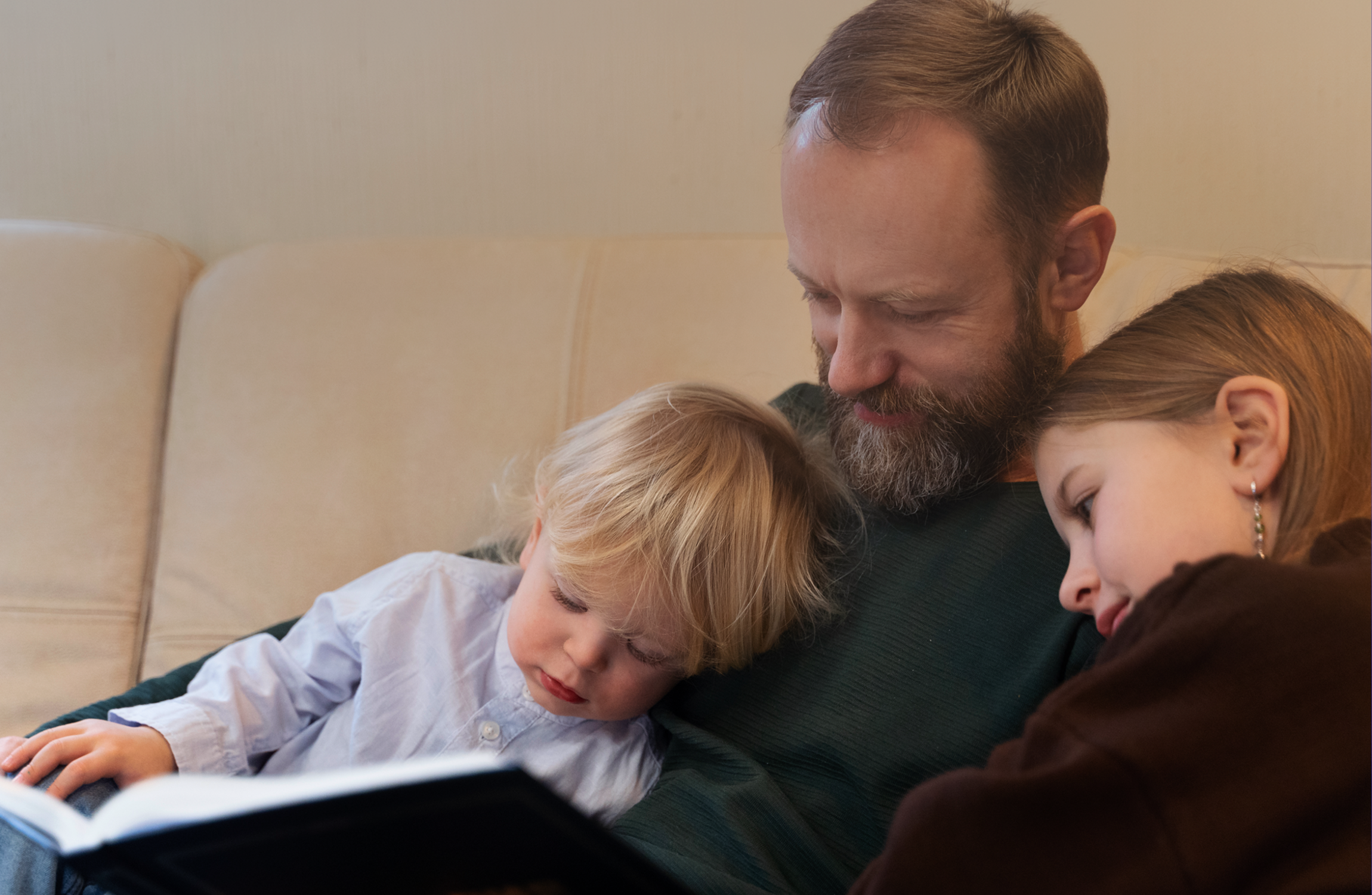
Most parents we work with already know reading to their child matters. The question they actually have is which books, how often, and whether what they are doing at home is enough.
This is for you if you have ever stood in front of the children's section at a bookshop or library, picked up four books, put them back, and walked out with one because you ran out of time. Or scrolled through a recommended list online and ended up more confused than when you started.
Here is one resource that quietly answers a lot of those questions: the Speech Pathology Australia Book of the Year shortlist. Browse the full 2026 BOTY shortlist: speechpathologyaustralia.org.au
Why it matters for your child
A child's first ten years are when language develops most rapidly. Vocabulary, sentence structure, the ability to follow a story, the confidence to start a conversation. All of it is being laid down faster between birth and age ten than at any other time in life.
Reading aloud is the simplest and most evidence-supported thing you can do at home to support that development. But not every book pulls equal weight. A book that is gorgeous to look at may not stretch your child's vocabulary. A book that is funny may not model the sentence structures they are about to need at school. A book that is wildly popular on social media may have been written for the parent, not the child.
The right book at the right age does real work for your child's communication. The wrong book is still nice, but it is wallpaper.
Why it matters for you
Time is the thing parents have least of, and the children's book market is bigger than ever. The Speech Pathology Australia Book of the Year shortlist exists to do the filtering for you.
It is judged by Certified Practising Speech Pathologists. The people on the panel are the same professionals who, in their day jobs, sit with children and help them build language. They are not asking "which book is most beautiful" or "which book had the biggest marketing budget." They are asking which books most effectively build the language skills children need.
In other words: it is a shortlist of children's books, vetted by people who are paid to know which children's books work. That is a rare and useful thing.
How to use it
The shortlist is grouped into four age categories: Birth to 3, 3 to 5, 5 to 8, and 8 to 10. A few simple ways to make the most of it:
Start with your child's age category, then borrow before you buy. Most public libraries will have a good number of the shortlisted titles. Borrow two or three. The ones that get read 47 times in a row are the ones to buy.
Don't be afraid to read one age up. A read-aloud is a great way to introduce slightly more complex language than your child could read independently. A three year old can enjoy and learn from a 3 to 5 year old shortlist book if you read it together.
Trust your child's repeat-reads. Books your child returns to are doing something they need. Pay attention to what they reach for. Then look for more like it.
Take the pressure off the parent. You do not need to read for an hour. Ten to fifteen minutes a day is enough to make a real difference, especially before age six. Consistency beats marathon sessions, every time.
The full 2026 shortlist is on the Speech Pathology Australia website. The 2026 winners will be announced on 28 October.
Five small shifts that make reading time work harder
1. Slow down. Most parents read too fast. Slow it down enough that your child can take in each page. If a picture is interesting, sit on it. There is no rush to the end.
2. Talk about the pictures. Pause and ask "what is happening here?" or "how do you think the dog is feeling?" The story on the page matters less than the conversation around it.
3. Use the new word twice. If a book uses "enormous," say it again later in your own words. "That is an enormous puddle, isn't it?" Repetition in different contexts is how new vocabulary actually sticks.
4. Let your child turn the page. This sounds tiny. It matters. It tells them they are part of the reading, not just being read at.
5. Read favourites again and again. Children learn from repetition. A book read 30 times teaches more than 30 books read once.
When to ask a speech pathologist
Most language development happens at its own pace. But a few signs are worth a conversation with a paediatric speech pathologist.
Your two year old has fewer than 50 words
Your three year old is hard to understand for people outside the family
Your four or five year old has trouble following two-step instructions
Your school-age child avoids reading or finds it exhausting
None of these are emergencies. All of them are easier to support early than late.
Our paediatric speech pathology team works across Mornington, Berwick and Reservoir. Initial consults are warm, family-friendly, and give you a clear sense of whether your child needs ongoing support or whether you are doing all the right things at home already.
Browse the full 2026 BOTY shortlist: speechpathologyaustralia.org.au
