
Reading Aloud With Your Child: A Speech Pathologist's Guide to Making It Count
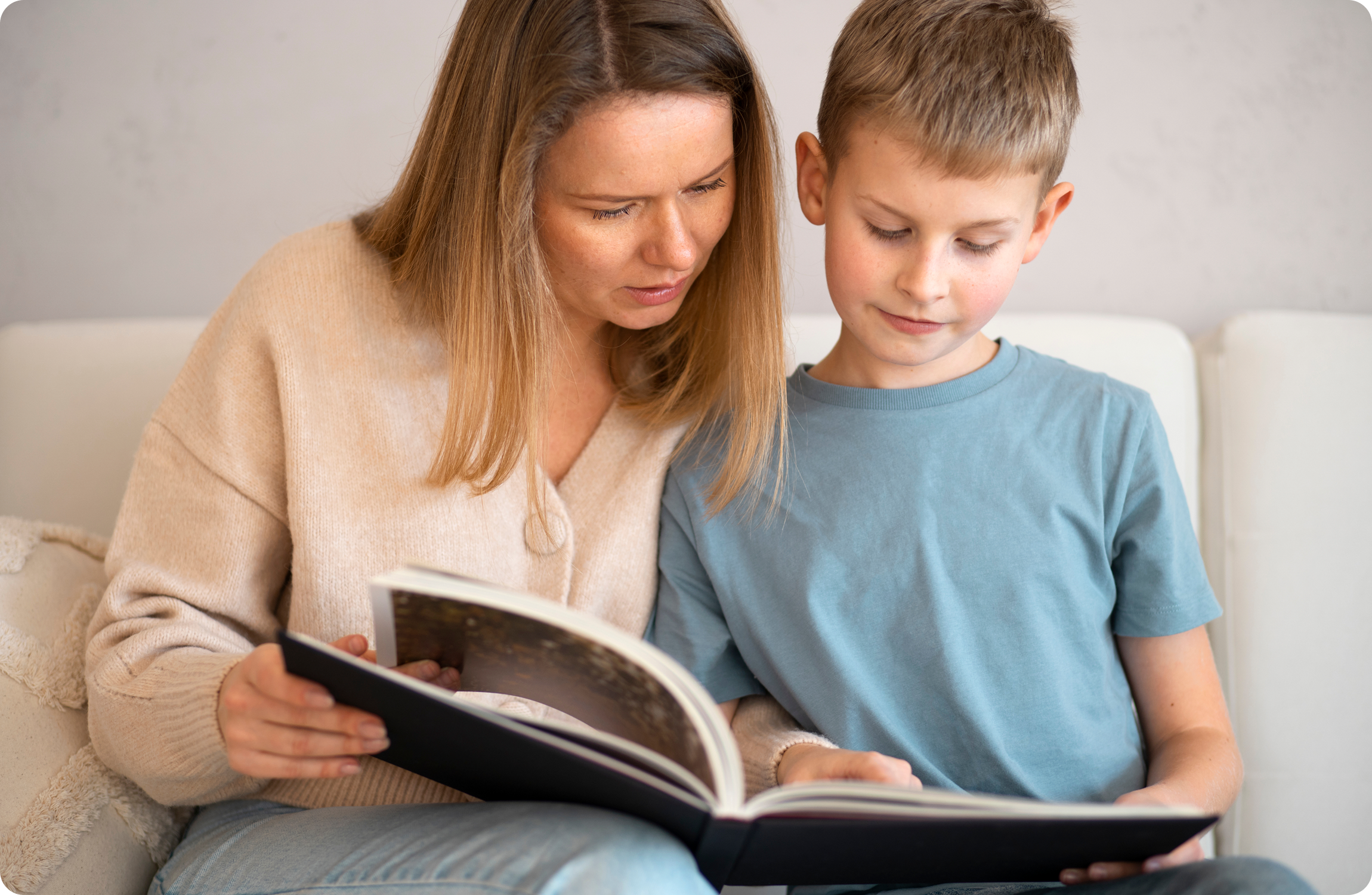
Reading to your child is one of the simplest, most powerful things you can do for their language development. But the way you read together matters as much as how often.
Our paediatric speech pathologists work with families every week who are reading to their children faithfully and still wondering if it is "doing anything." The answer is almost always yes, but a few small shifts can make it do a lot more.
What reading aloud actually builds
A child who is read to regularly is building five things at once.
Vocabulary they hear words they would never hear in everyday conversation
Sentence structure they learn how language is put together
Comprehension they practise following an unfolding story
Imagination they connect words to images they cannot see
Connection with you which is the foundation for everything else
You do not need to read for an hour. Ten to fifteen minutes a day is enough to make a real difference, especially before age six.
Five ways to make reading time work harder
1. Slow down. Most parents read too fast. Slow it down enough that your child can take in each page. If a picture is interesting, sit on it. There is no rush to the end.
2. Talk about the pictures. Pause and ask "what is happening here?" or "how do you think the dog is feeling?" The story on the page matters less than the conversation around it.
3. Use the new word twice. If a book uses "enormous," say it again later in your own words. "That is an enormous puddle, isn't it?" Repetition in different contexts is how new vocabulary actually sticks.
4. Let your child turn the page. This sounds tiny. It matters. It tells them they are part of the reading, not just being read at.
5. Read favourites again and again. Children learn from repetition. A book read 30 times teaches more than 30 books read once.
What about screens?
A child being read to by a parent is not the same as a child watching a story on a screen. The interaction is the active ingredient. Audio books and animated stories have their place, especially in the car, but the daily five-to-fifteen-minutes with you is the part that matters most.
When to ask for help
Most language development happens at its own pace, but a few signs are worth a conversation with a speech pathologist.
Your two year old has fewer than 50 words
Your three year old is hard to understand for people outside the family
Your four to five year old has trouble following two-step instructions
Your school-age child avoids reading or finds it exhausting
None of these are emergencies. All of them are easier to support early than late.
Our paediatric speech pathology team work across Mornington, Berwick and Reservoir. Initial consults are warm, family-friendly, and give you a clear sense of whether your child needs ongoing support or whether you are doing all the right things at home already.
